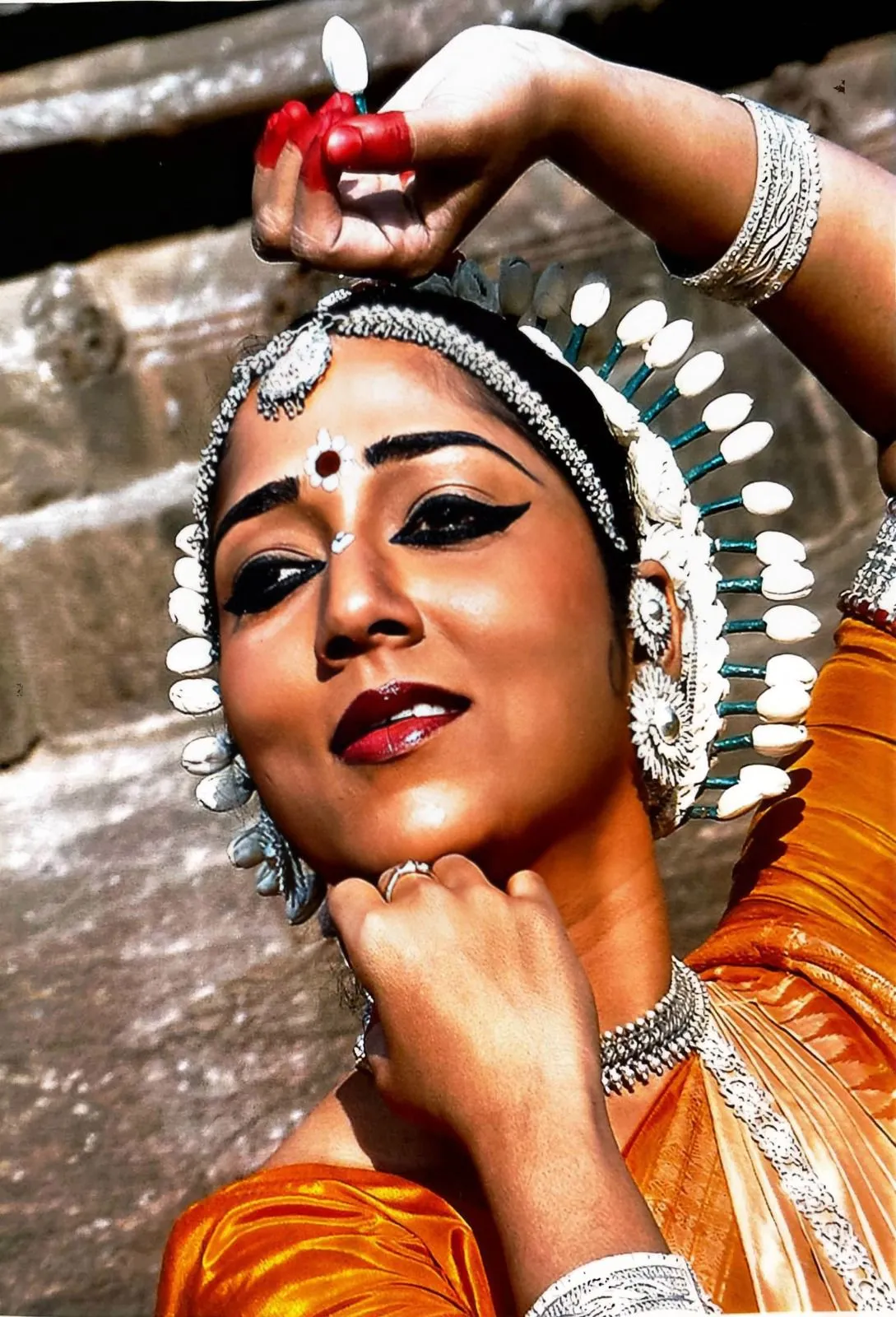
Rāsa-līlā: In the Eternal Circle of Vrindavan
We began to feel that the Rāsa-līlā was not merely an event belonging to the distant past. It was something living. Something present. It flowed through the groves, the temples, the kirtans, the dust of the pathways, and the hearts of the devotees. The land itself seemed to throb with that eternal exchange of love between Sri Krishna and the Gopīs.
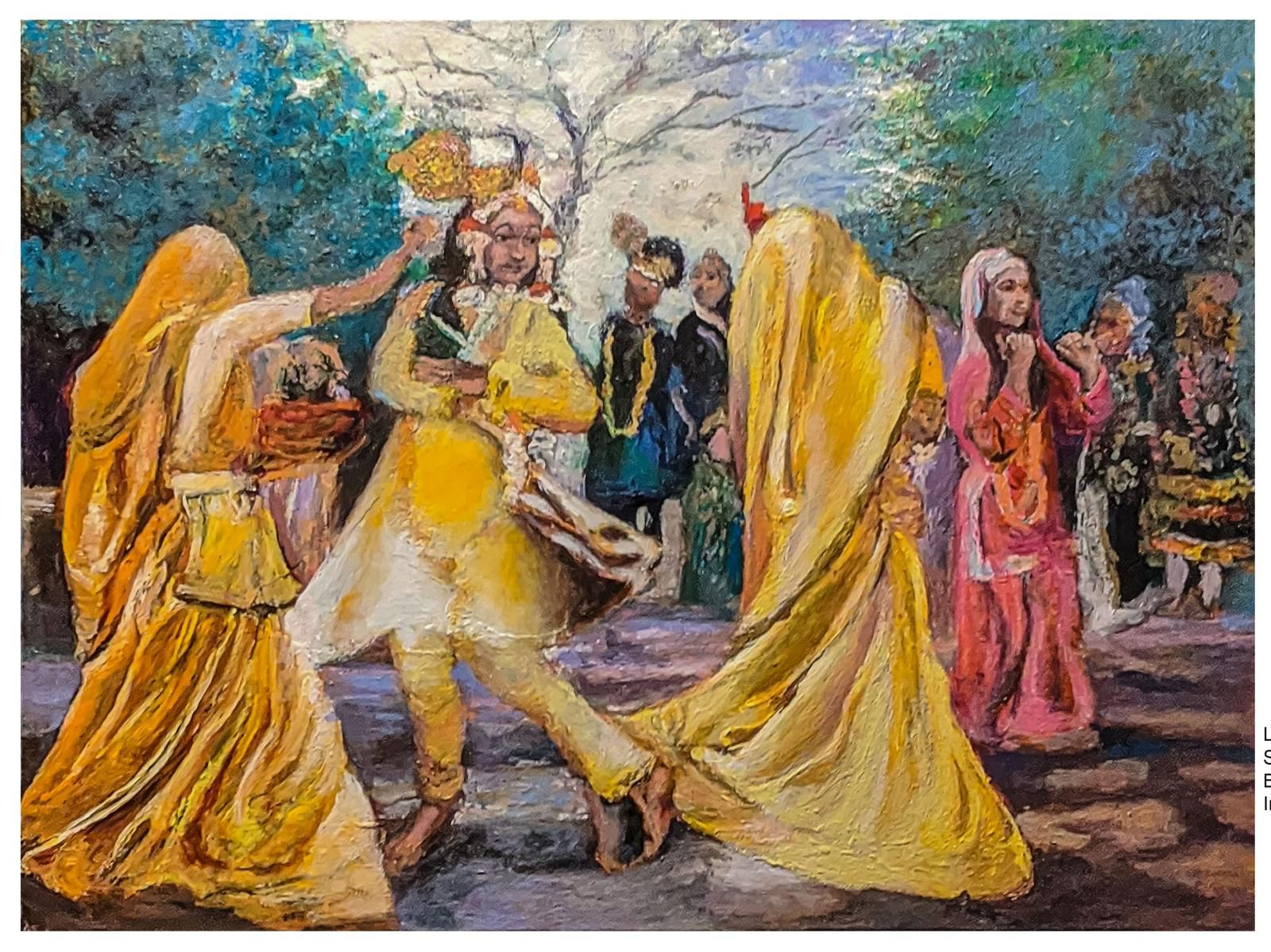
Slowly, a new understanding dawned upon us: Rāsa-līlā is not simply a story to be remembered---it is an eternal reality. What took place on that divine night continues forever, beyond the limits of time. In Vrindavan, one does not merely hear about it; one begins to sense its presence, as though the very heartbeat of the land moves to the rhythm of that endless dance of divine love.
The Srimad Bhagavatam opens the doorway to this reality in its description of the beginning of Rāsa Pañcādhyāya:
"भगवानपि ता रात्रिः शरदोत्फुल्लमल्लिकाः ।
वीक्ष्य रन्तुं मनश्चक्रे योगमायामुपाश्रितः ॥ १०.२९.१ ॥"
- Srimad Bhagavatam
Meaning:
On that autumn night, when jasmine flowers had fully blossomed, Krishna, seeing the beauty of the season, resolved to engage in divine play, manifesting through Yogamāyā.
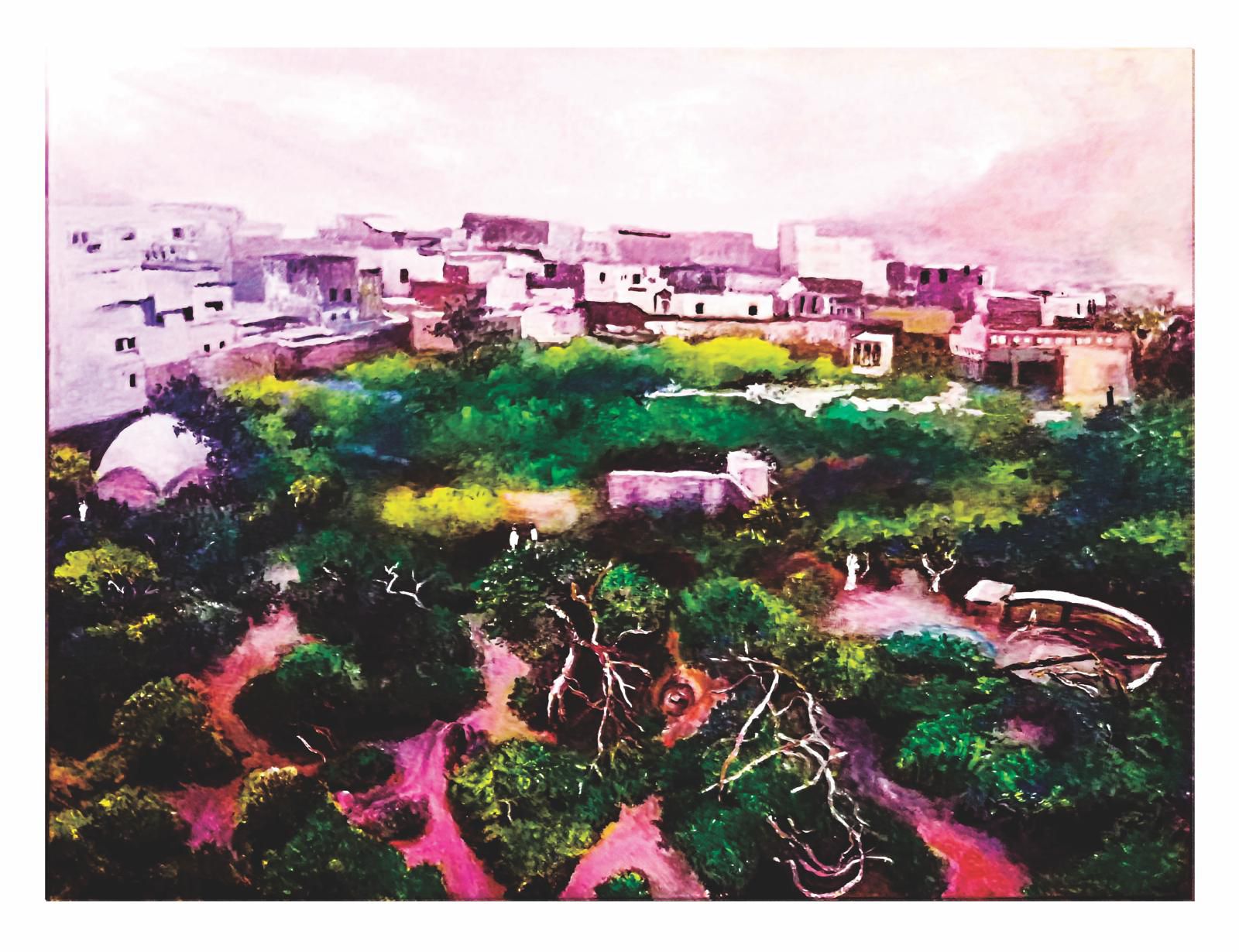
These verses of the Srimad Bhagavatam contain far more than a simple description of a moonlit night in Vrindavan. The text reveals a moment when all of creation seems perfectly attuned to the unfolding of divine love. The autumn night is not merely a setting for the Rāsa-līlā; it symbolizes a world that has become still, pure, receptive, and luminous enough to reflect the highest spiritual reality.
The Gopīs arrive---not compelled by command or obligation, but drawn by an irresistible love for Sri Krishna. In doing so, they transcend the ordinary identities and structures that define worldly existence. Their journey into the forest represents something deeper than physical movement; it signifies the soul's response to the call of the Divine, a response that rises beyond convention, fear, and calculation.
Sri Krishna, though one, appears beside every Gopī simultaneously. The One becomes many without ever ceasing to be One. The Divine is infinite and indivisible, yet capable of establishing a complete and intimate relationship with every individual soul. Divine love is not diminished by being shared. Rather, its very nature is to be wholly present wherever it is received.
Rāsa-līlā ceases to be viewed merely as a sacred episode from the distant past and begins to reveal itself as a timeless expression of the relationship between the Divine and the soul---a revelation of love that transcends the limitations of time, space, and ordinary understanding.
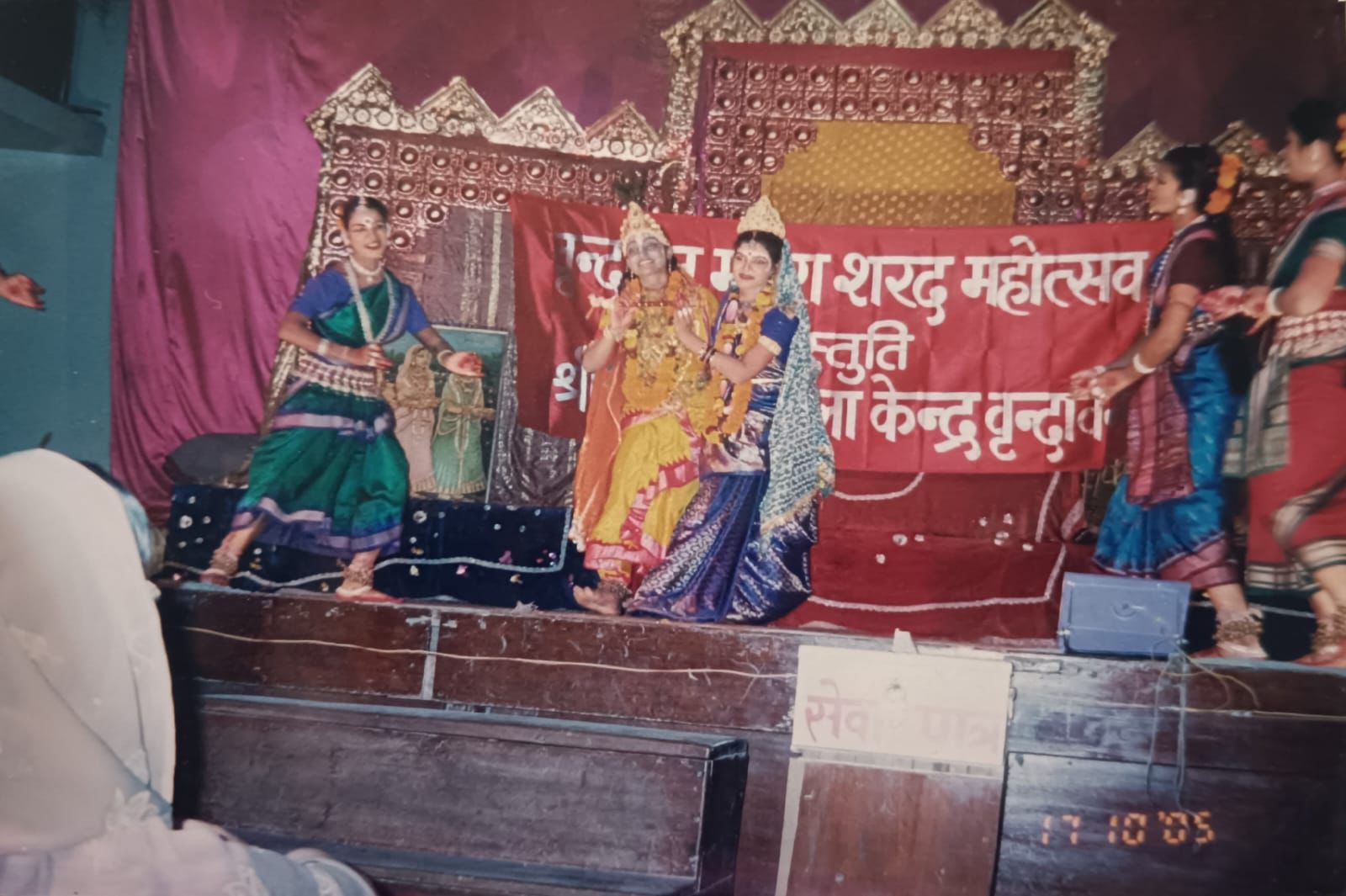
Srimad Bhāgavata reveals this intimacy:
"तासां आविरभूच्छौरिः स्मयमानमुखाम्बुजः" (10.33.3)
- Srimad Bhagavatam
Meaning:
Krishna appeared among the Gopīs, His lotus face carrying a gentle, playful smile.
In that moment, Rāsa is no longer a circle of many around one. It becomes countless intimate realities occurring simultaneously. Each Gopī experiences Krishna as fully present with her alone. There is no sense of exclusion, no sense of distance, no sense of multiplicity creating separation. The One becomes fully present to each, without becoming less.
This is where the Rāsa Mandala reveals its deeper meaning. The Gopīs form a circle, but the circle is not static geometry. It is movement itself---breathing, expanding, contracting in rhythm with divine presence. Krishna stands at the centre, yet He is not confined to centre. He is simultaneously the centre and the entirety of the circle. Every point in the circle is a direct relationship. Every movement is a dialogue between love and presence.
There is no audience in this mandala. There is no performer either. There is only participation in different intensities of surrender. The forest of Vrindavan becomes the stage, but even that word feels insufficient, because it is not constructed---it is revealed.
As our own journey continued over the years, something within us began to shift in response to this understanding. The more we returned to Vrindavan, the more we realized that what we had been calling "performance" was gradually becoming offering. The dance no longer felt like something we were executing for others. It began to feel like something moving through us, something we were allowed to participate in rather than control.
As these experiences accumulated over years, Vrindavan itself began to reshape our inner understanding of devotion. The land does not present itself as symbolic. It feels lived. The dust, the groves, the Yamuna---all carry a kind of continuity that does not break with time. It is within this continuity that Rāsa-līlā is experienced not as event but as presence.
What remains most alive in us is not any single performance, but the slow transformation of perception that Vrindavan brings. It is a place where the idea of observer begins to fade. One does not stand outside for long. One is gradually drawn into its emotional field, where movement is devotion, and devotion is movement.
And for us, beginning from that first journey with my father in 1986, every return has been a quiet continuation of entering that same eternal circle---again and again---not as spectators, but as those slowly learning to belong within the rhythm of divine love.