The Essence of Bhubaneswar: Walking Through Stone, Time, and Dance
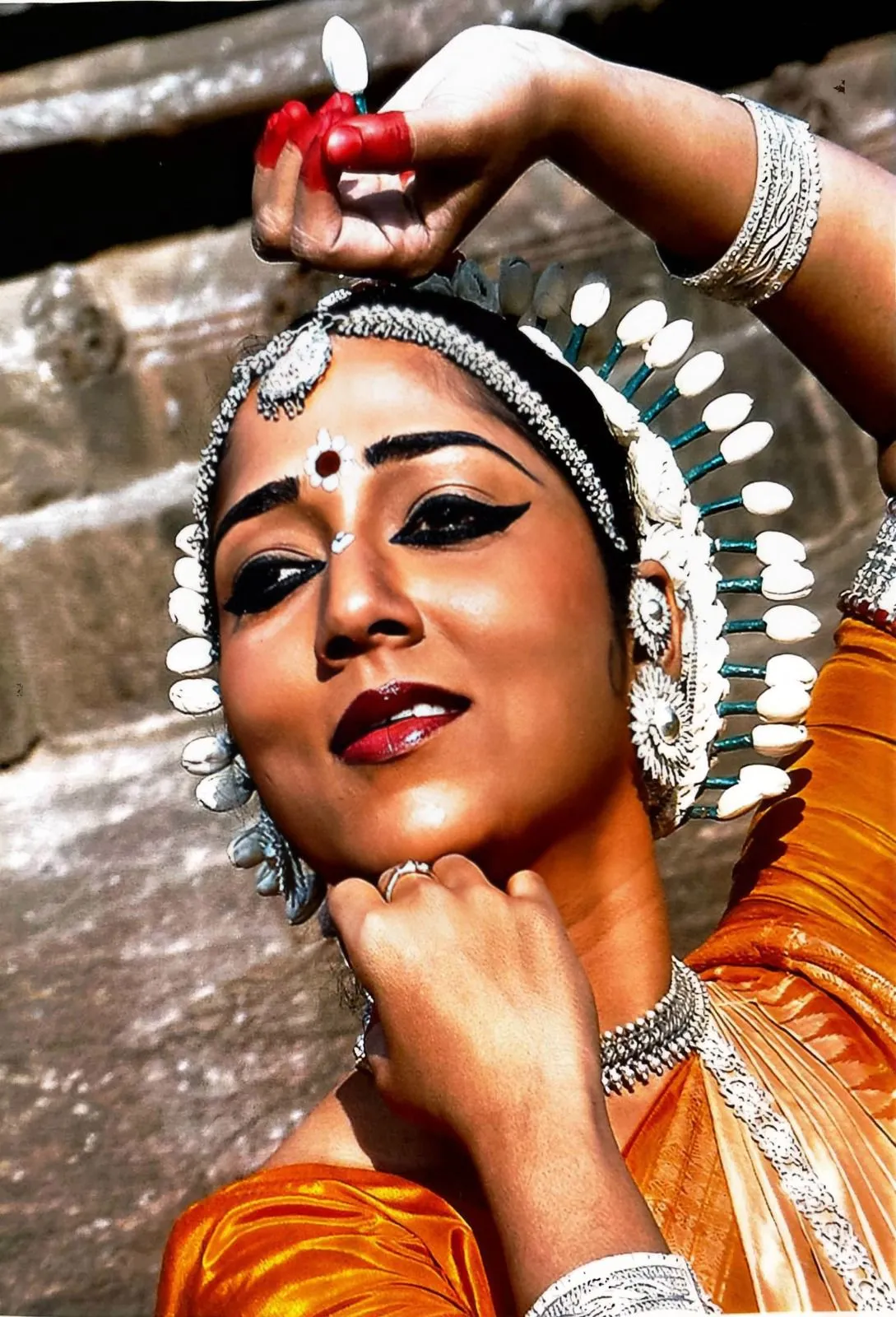
There is something deeply transformative about walking through the temple-lined lanes of Bhubaneswar's Old Town---something that lingers long after the footsteps fade. The air feels different here, dense with memory, devotion, and an unspoken rhythm. For me, as an Odissi dancer, these walks are never just about heritage or history; they become intimate conversations with stone, movement, and time itself.
The city, often called Ekamra Kshetra, is not merely a geographical space---it is a living archive. Every surface seems to hold a trace of artistic expression. In this sacred landscape, dance does not feel like a separate discipline; it feels embedded in the very fabric of existence.
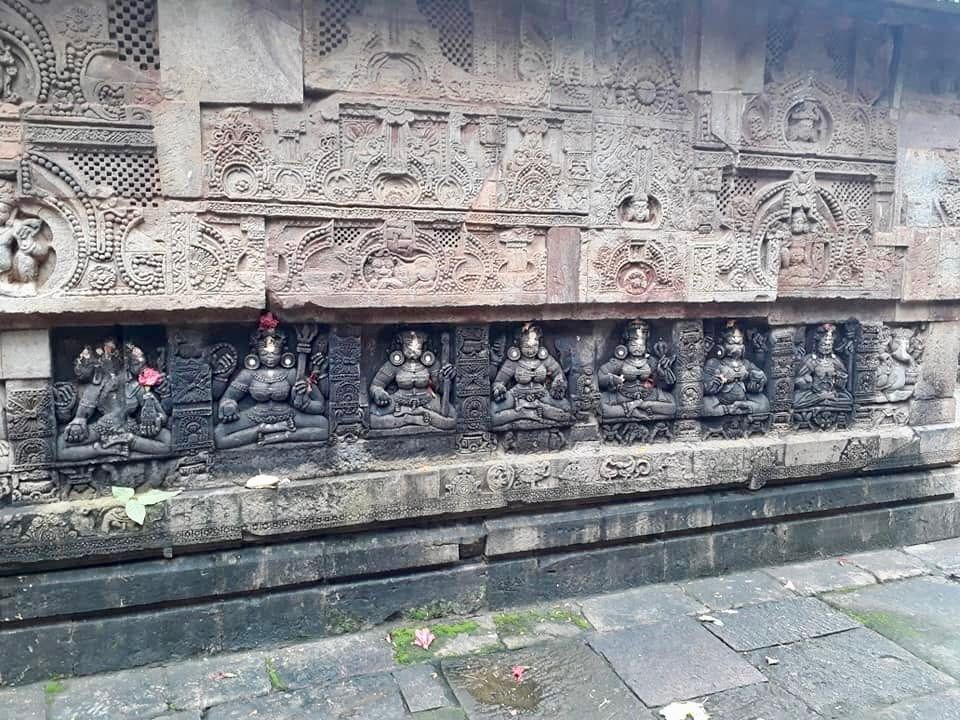
Being an Odissi dancer, it becomes second nature to visit temples and observe their carvings with a certain intensity. Every sculpted figure, every stance, every curve of the body etched into sandstone feels like a silent teacher. Over time, one begins to read these sculptures almost instinctively---identifying bhangis (postures), tracing lines of movement, and attempting to recreate them through the body.
Yet, every visit humbles me anew.
Each temple reveals not just what is known, but how much remains unknown. The more closely one observes, the more elusive the understanding becomes. What appears still in stone carries an energy that is anything but static.
Odissi is often described as a dance form that emerged from temple traditions, particularly from the ritualistic performances of the Maharis---the temple dancers dedicated to divine service. Its grammar is deeply rooted in sculptural representations found across Odisha, where dance and devotion were once inseparable.
Several important texts guide our understanding of this connection. Works such as the Abhinaya Chandrika by Sri Maheshwar Mahapatra, writings by Dr. D.N. Pattnaik, and references from the Natya Shastra offer insights into the codification of movement. But it is only when these texts are read alongside temple sculptures that their full meaning begins to unfold. Together, they create a dialogue between theory and lived practice.
Even earlier than the temples, the caves of Udayagiri and Khandagiri from the time of King Kharavela offer glimpses into the antiquity of movement traditions in the region. The reliefs here depict dynamic human forms in rhythmic poses. While not Odissi in its present form, these figures suggest an early vocabulary of movement---precursors to the tribhangi (three-bend posture) and chowka (square stance) that define Odissi today.
As temple architecture evolved, so did the complexity of these visual narratives.
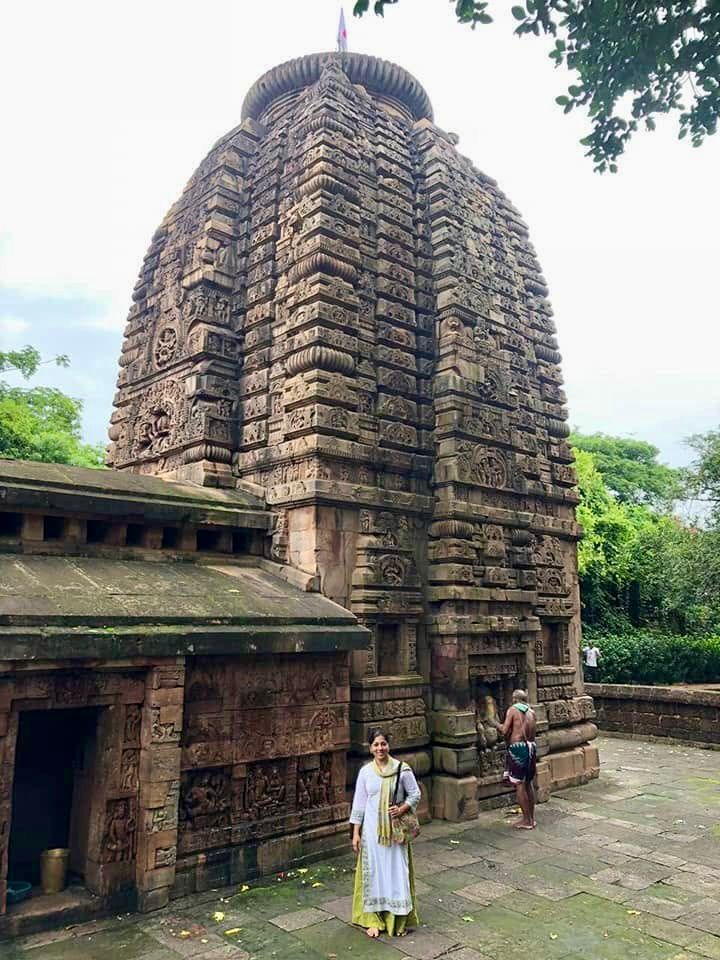
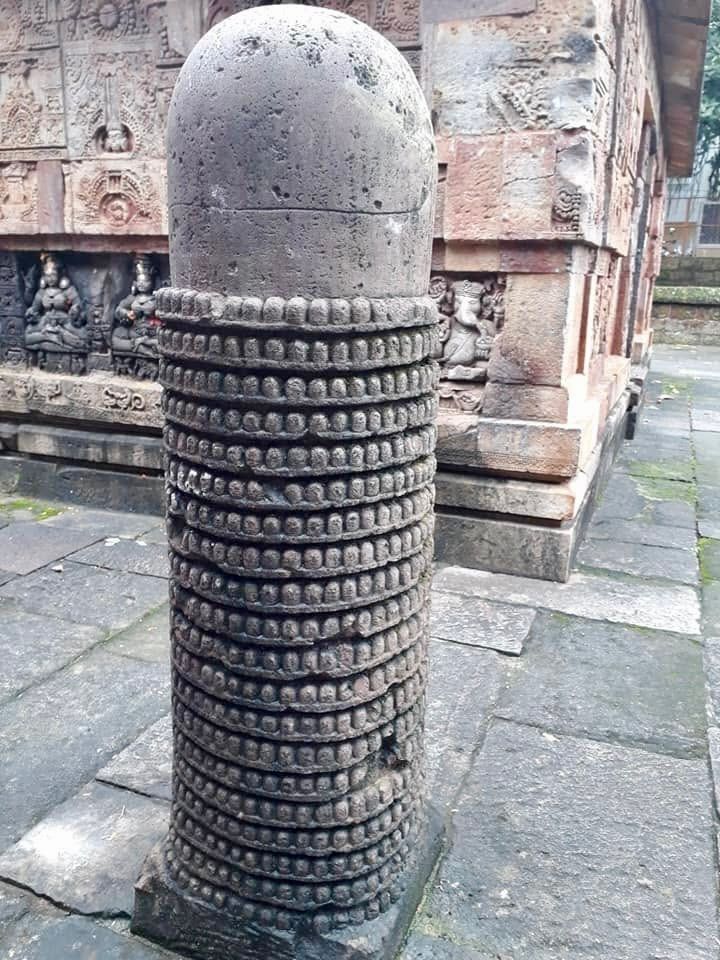
Temples such as Parasurameswar (7th century CE), Mukteswar (10th century CE), and Lingaraj (11th century CE) present increasingly refined representations of movement. The sculptures here are not merely decorative---they are instructional. They capture the essence of posture, balance, and expression with remarkable precision.
At Mukteswar Temple, often called the "Gem of Odisha architecture," the carvings are delicate yet deeply expressive. The iconic torana (arched gateway) frames a series of dancers frozen in graceful tribhangi poses. Standing before them, one feels an almost instinctive urge to respond---to mirror the posture, to inhabit the curve. In such moments, the boundary between observer and participant dissolves.
Parasurameswar, one of the oldest temples in the city, offers a different experience. The figures here are less ornate but more grounded, reflecting an earlier stage of stylistic evolution. The bhangis are subtle, emphasizing shifts in weight and balance rather than elaborate ornamentation.
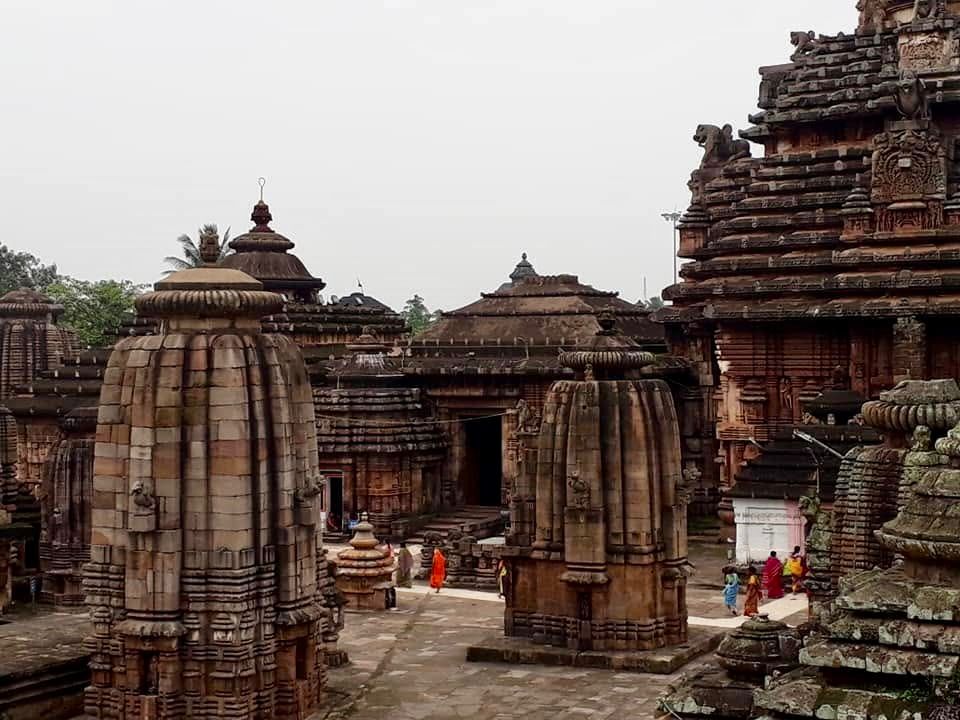
Lingaraj Temple, in contrast, overwhelms with scale and detail. Dominating the skyline, it represents the maturity of Kalinga architecture. Here, the chowka stance---associated with strength and stability---finds powerful expression in the sculptures. The postures feel more assertive, more defined, as though the language of movement has come fully into its own.
Each temple, in its own way, offers a distinct vocabulary of movement. Together, they form a continuum---a visual history of dance unfolding across centuries.
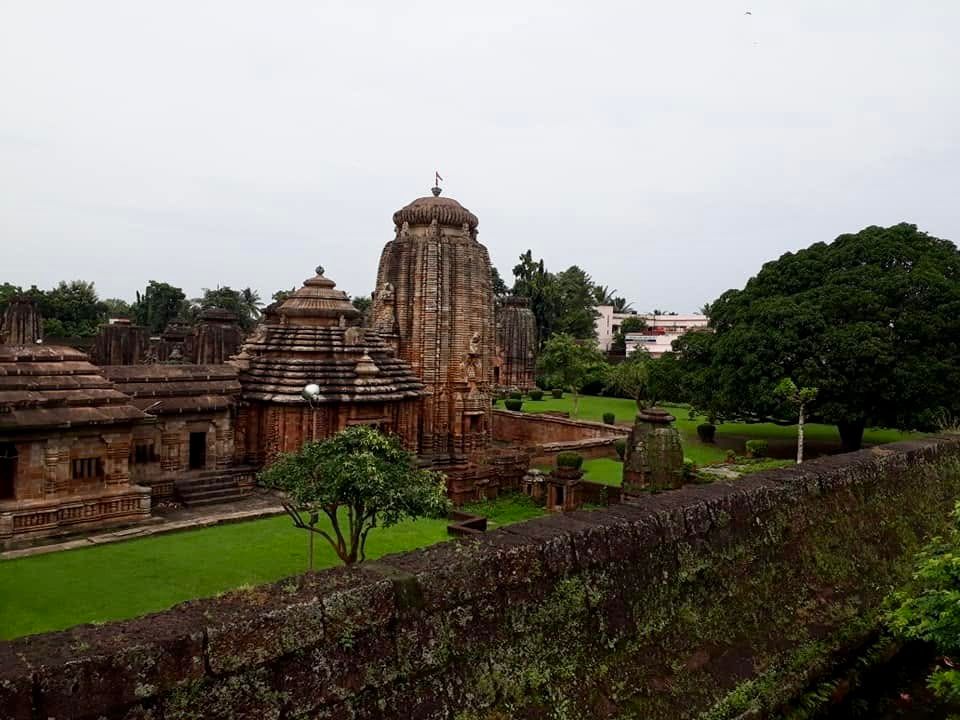
Intrigued by the idea of revisiting these sacred spaces with fresh eyes, I joined the Ekamra Heritage Walk---an initiative that celebrates Bhubaneswar's architectural and cultural legacy. Beginning early on a quiet Sunday morning at Mukteswar Temple, the walk spans nearly two kilometers, weaving through a dense network of temples before concluding back at the same point.
But this is not merely a guided tour. It is a retelling of stories---of kings and craftsmen, of rituals and rhythms, of a civilization that saw no separation between art and life.
As we moved through the Old Town, the experience unfolded like a layered narrative.
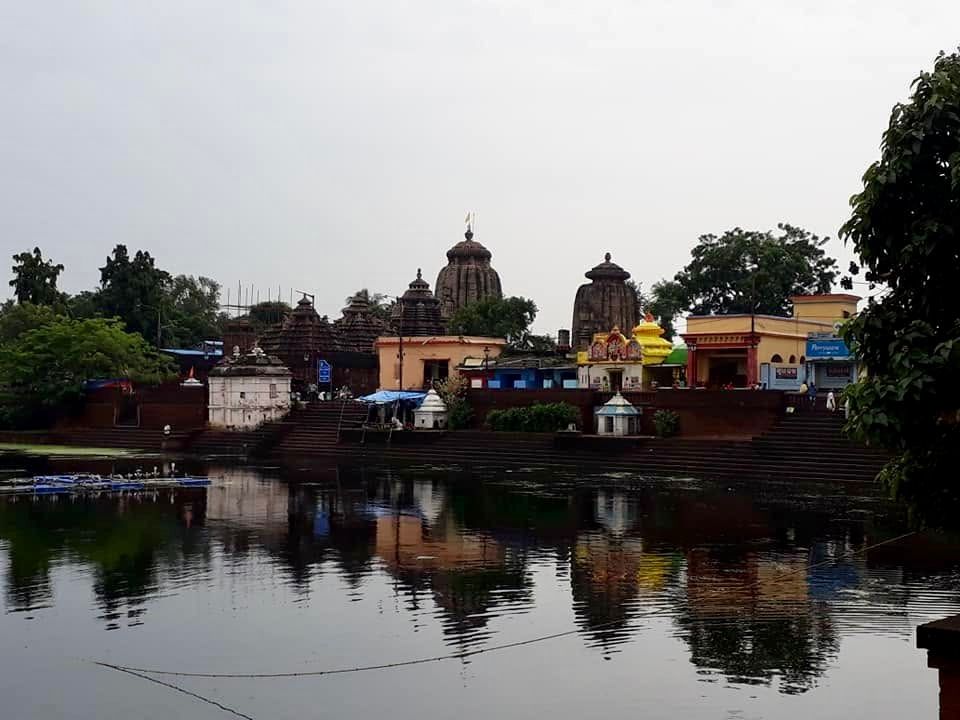
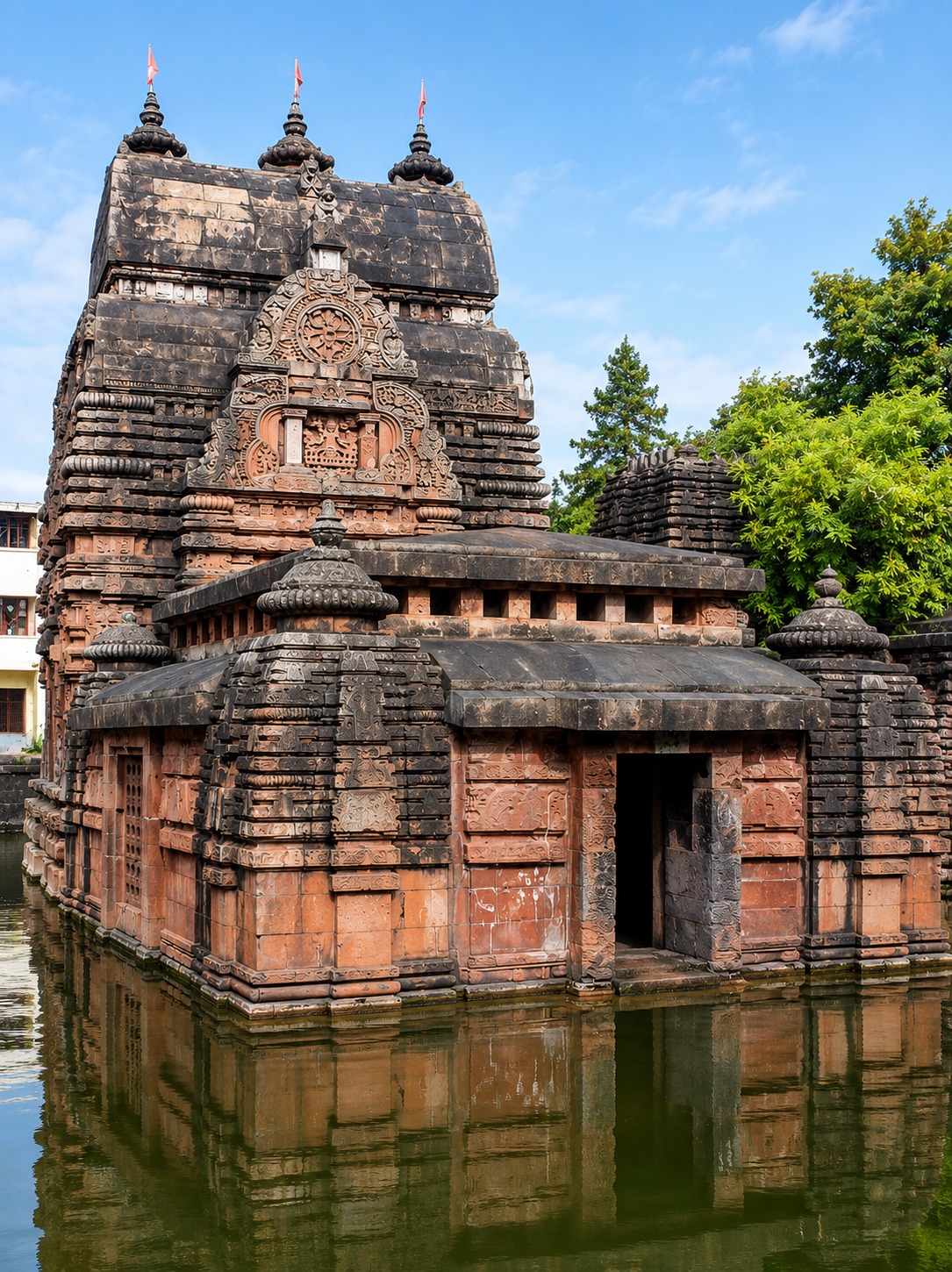
At Bindusagar Lake, the atmosphere shifted perceptibly. The water, believed to contain drops from all holy rivers, reflected the surrounding temples like a mirror to the past. Here, dance felt less like performance and more like prayer.
Nearby, the Ananta Vasudeva Temple stood apart in both form and function. Dedicated to Lord Krishna, it remains an active centre of worship. Its sculptures, unlike the more abstract postural studies seen elsewhere, depict narrative scenes---episodes from mythology that invite interpretation and storytelling. For a dancer, they open up a different dimension of engagement.
The walk also brought us to spaces that are often overlooked---the Doodhwala Dharmashala, quietly standing by the lake, and lesser-known temples like Chitrakarini and Suka Sari Deula.
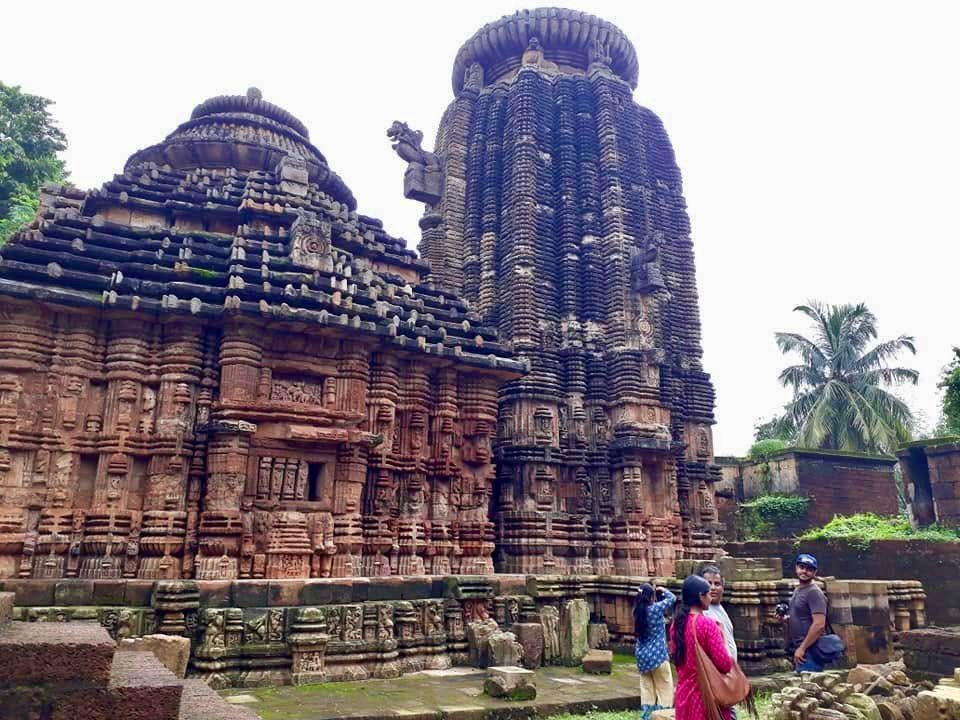
One of the most striking stops was Baital Deula, built in the 8th century. With its distinctive Khakhara style of Kalinga architecture, it stands apart from the more familiar forms of Kalinga temples. The three spires represent the three gunas -- rajas, tamas and sattva. Dedicated to Devi Chamunda, the temple introduces a more intense aesthetic. The sculptures here are powerful, even fierce. The postures verge on the dramatic, offering a stark contrast to the lyrical grace often associated with Odissi. It is a reminder that the dance form encompasses a wide emotional spectrum---from the gentle to the formidable.
As the walk continued towards Ekamra Van, the powerful presence of the temples gradually gave way to calm. The garden, with its medicinal plants and quiet pathways, offered space for reflection.
By this point, what lingered was not just admiration for the architecture, but a deeper appreciation for the vision behind it.
The emperors and kings who commissioned these temples, the sculptors who shaped them, the architects who designed them with such precision---all contributed to a legacy that continues to inspire. But more than that, it is the worldview embedded in these structures that resonates most strongly.
In these temples, art is not separate from life. Dance, music, ritual, and daily existence are intertwined, each informing the other. The figures carved into stone---dancers, musicians, deities, and ordinary people---exist within the same continuum.
For a dancer, this realization is both inspiring and humbling.
Every time I attempt a bhangi inspired by a temple sculpture, I am reminded of the distance between imitation and understanding. The body can replicate a posture, but the essence---the bhava (emotion), the urja (energy), the intention---takes years to internalize.
And perhaps that is the true gift of Bhubaneswar.
It does not offer easy answers. Instead, it invites return. Again and again.
Each visit reveals something new---a detail previously unnoticed, a connection previously unfelt. Over time, the city becomes less of a destination and more of a practice.
The Ekamra Heritage Walk, in this sense, is not just a journey through space. It is a journey inward.
For a dancer, it is a pilgrimage.
For a visitor, it is an awakening.
And for the city itself, it is a quiet affirmation---that its soul lives not only in its temples, but in the stories, they continue to tell.